
Red Light vs Near Infrared: What Sets Them Apart

Choosing the right solution for younger-looking skin or fuller hair often means sifting through endless options that rarely deliver real change. For many, non-invasive therapies appeal most, promising visible results without risky procedures. Photo biomodulation uses targeted red and near-infrared wavelengths to activate cellular repair, improving both skin and hair health without heat or pain. Discover how understanding the science behind each wavelength can help you pick the technology that matches your unique goals.
Table of Contents
- Defining Red Light And Near Infrared Therapy
- How Red And Near Infrared Wavelengths Work
- Deep Penetration And Targeted Benefits Compared
- Choosing The Right Wavelength For Skin And Hair
- Common Misconceptions And Device Mistakes
Key Takeaways
| Point | Details |
|---|---|
| Red Light Therapy Focuses on Surface | Red light therapy effectively targets skin and superficial tissues, producing visible skin improvements in 2-4 weeks. |
| Near-Infrared Therapy Targets Deeper Tissues | Near-infrared light penetrates deeper, addressing muscles and joints, with benefits noticeable in 4-8 weeks. |
| Combining Wavelengths Maximizes Benefits | Using both red and near-infrared light in one session can yield comprehensive results for aesthetic and recovery goals. |
| Device Quality is Crucial for Effectiveness | Ensure devices deliver precise wavelengths and adequate power to achieve meaningful biological effects; poor quality can lead to wasted time and resources. |
Defining red light and near infrared therapy
Red light and near-infrared (NIR) therapy work by using specific wavelengths of light to trigger healing at the cellular level. Also called photobiomodulation, this non-invasive approach stimulates your cells to repair themselves without drugs or surgery.
Think of light wavelengths like radio frequencies—different stations broadcast at different frequencies, and your cells respond differently to different light frequencies. The key distinction between red and near-infrared light comes down to wavelength and how deep the light penetrates your skin.
What is Red Light Therapy?
Red light operates in the 620 to 750 nanometer (nm) wavelength range. This spectrum stays relatively close to your skin's surface, making it ideal for visible tissue benefits.
Red light targets skin directly, which is why it's particularly effective for:
- Stimulating collagen production for skin firmness
- Reducing fine lines and improving skin texture
- Supporting natural hair growth at the follicle level
- Calming inflammation and redness
- Enhancing blood circulation in superficial tissues
Red light's shallow penetration makes it your first line of defense for visible skin and scalp concerns—benefits you can see and feel within weeks.
What is Near-Infrared Light Therapy?
Near-infrared light operates between 750 and 1100 nm wavelengths. This range penetrates significantly deeper than red light, reaching muscles, joints, and even internal tissues.
Because NIR travels deeper, it works at a different level:
- Powers up mitochondrial function (your cells' energy factories)
- Supports muscle and joint recovery after activity
- Enhances overall energy production throughout your body
- Reaches tissues beneath the skin surface
- Promotes deeper tissue regeneration
Near-infrared light works on your body's internal infrastructure, while red light focuses on surface-level concerns.
How These Therapies Work Together
Both red and NIR light use your body's natural biological processes. Low-level light therapy employs these wavelengths to modulate cellular function and encourage repair and regeneration. When light photons hit your cells, they energize mitochondria to produce more ATP (cellular energy), sparking a cascade of healing responses.
The combination matters. Red light handles your skin's outer layers while near-infrared penetrates deeper tissues, making them complementary tools in one treatment system.
Many modern devices deliver both wavelengths simultaneously, so you get surface and deep benefits in a single session.
Here's a side-by-side look at how red light and near-infrared therapy differ:
| Aspect | Red Light Therapy | Near-Infrared Therapy |
|---|---|---|
| Typical Wavelength | 620-750 nm | 750-1100 nm |
| Penetration Depth | Surface layers of skin | Several centimeters into tissue |
| Primary Targets | Skin, scalp, superficial tissues | Muscles, joints, bones, deep tissues |
| Visible Effects Timeline | 2-4 weeks for skin | 4-8 weeks for deep recovery |
Pro tip: Use red light therapy in the morning for an immediate skin and mood boost, and reserve near-infrared sessions for evening recovery after workouts or demanding days when your body needs deeper cellular support.
How red and near infrared wavelengths work
Your cells don't just absorb any light—they respond specifically to certain wavelengths like a lock responds to a particular key. Red and near-infrared light trigger distinct biological pathways based on how deep they penetrate and which molecules they activate.
The magic happens inside your mitochondria, the powerhouse of every cell. When light hits these organelles, it energizes cytochrome c oxidase, an enzyme that sparks ATP production—the energy currency your cells run on.
How Red Light Activates Cells
Red light in the 620-750 nm range primarily interacts with chromophores near your skin's surface. These light-sensitive molecules sit in the outer layers of your mitochondria, so red light doesn't need to travel far to do its job.
When red light penetrates:
- It stimulates cellular energy production almost immediately
- Reduces oxidative stress that ages your skin
- Triggers collagen synthesis in fibroblasts
- Activates repair pathways visible on your skin within weeks
- Works best for conditions affecting the dermis and epidermis
Red light's immediate action on surface tissues makes it ideal for beauty and wellness goals you can actually see.
How Near-Infrared Light Reaches Deeper
Near-infrared light around 800-900 nm has a superpower: lower scattering and absorption rates. This means photons travel deeper into muscle, bone, and joint tissue without losing their therapeutic punch.

Due to reduced light scattering, NIR penetrates several centimeters beneath your skin. It reaches structures red light cannot touch, activating the same mitochondrial pathways but in deeper tissues. Near-infrared absorption bands penetrate deeper into biological samples compared to other wavelengths, making it uniquely suited for internal recovery.
This deeper penetration supports:
- Muscle and joint recovery after intense activity
- Mitochondrial function in deeper tissues
- Reduced inflammation in connective tissues
- Enhanced cellular repair below the skin surface
The Science Behind Wavelength Effectiveness
Red light wavelengths primarily interact with chromophores like cytochrome c oxidase in mitochondria near your skin's surface. The specific wavelength matters because it determines absorption patterns.
Three factors control how well light therapy works:
- Wavelength — determines penetration depth and which molecules absorb the light
- Power — higher intensity delivers more photons for stronger activation
- Exposure time — longer sessions allow deeper penetration and stronger effects
Mix these correctly, and you activate specific biological pathways. Get them wrong, and you waste time without results.
Pro tip: Start with 10-15 minute red light sessions for skin concerns, and gradually increase near-infrared exposure to 20 minutes as your body adapts, monitoring how your skin and energy levels respond.
Deep penetration and targeted benefits compared
Red and near-infrared light don't just differ in wavelength—they target completely different layers of your body. Understanding where each works best helps you choose the right therapy for your specific goals.
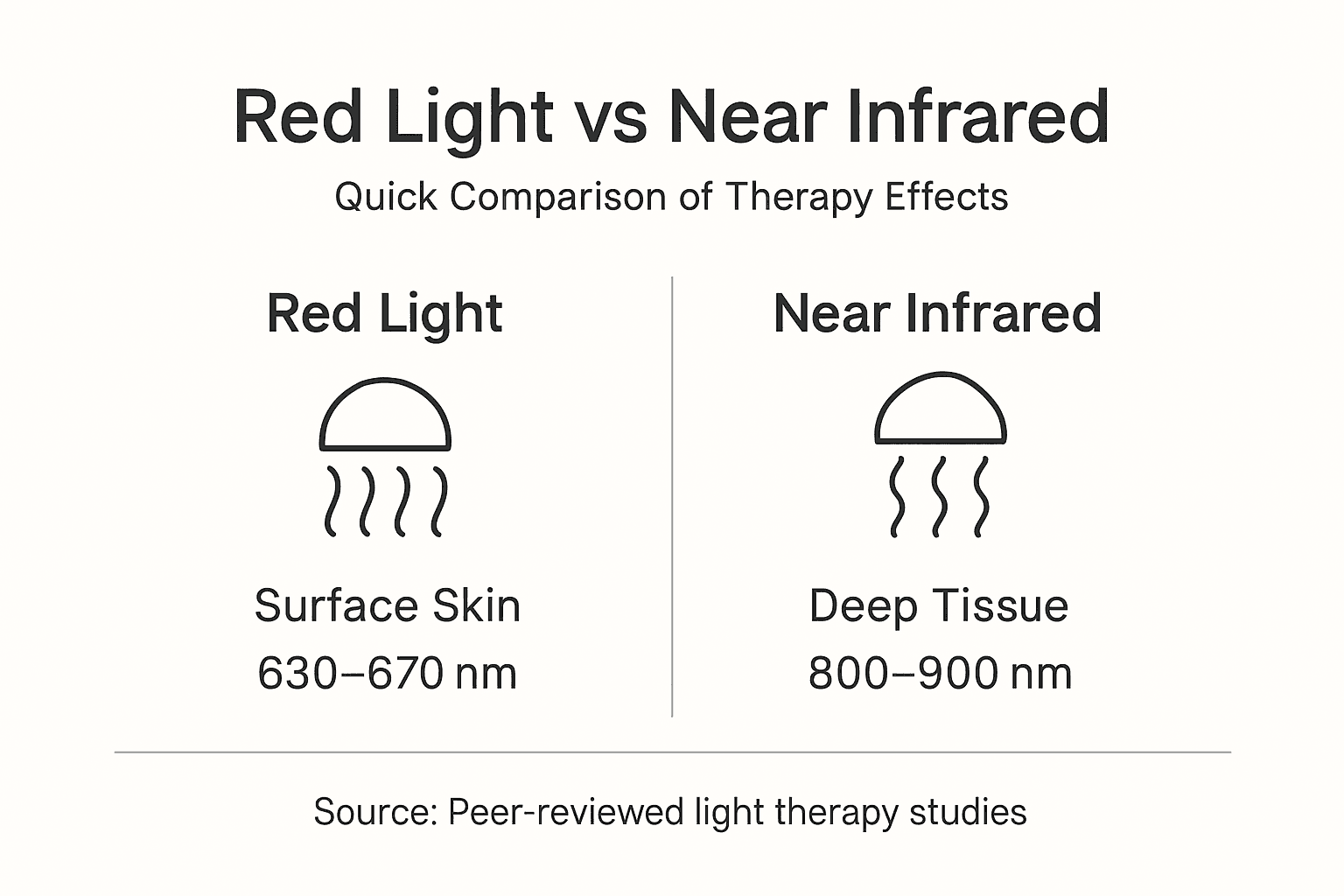
Think of it like choosing between addressing a problem on the surface versus fixing the foundation underneath. Red light handles the visible layer while near-infrared addresses what lies deeper.
Red Light: Surface-Level Precision
Red light primarily affects superficial tissues like skin, hair follicles, and the outer dermis. It doesn't penetrate deeply, but that's actually perfect for beauty and aesthetic concerns.
Red light excels at:
- Improving skin texture and reducing fine lines
- Stimulating hair growth from follicle level
- Reducing visible redness and inflammation
- Boosting collagen production in accessible tissue layers
- Healing minor cuts, scars, and blemishes
Because red light stays near the surface, results appear quickly. You'll notice skin improvements within 2-4 weeks of consistent use.
Near-Infrared Light: Deep Tissue Penetration
Near-infrared light travels several centimeters beneath your skin, reaching muscles, joints, bones, and connective tissue. Near-infrared light penetrates human tissue more deeply than red light, accessing structures red light cannot reach.
This deeper reach targets:
- Muscle soreness and recovery after workouts
- Joint stiffness and chronic pain
- Deep tissue inflammation
- Mitochondrial function in muscles and organs
- Bone healing and density support
Near-infrared works internally, so benefits take longer to manifest—typically 4-8 weeks—but they address root causes rather than surface symptoms.
The Power Problem: Therapeutic Dosage Matters
Here's where many devices fail: penetration alone isn't enough. Effective photobiomodulation requires delivering a therapeutic fluence range of 0.9 to 15 J/cm2 to actually activate cellular function.
Low-power LED devices often sound impressive but deliver insufficient energy to reach target tissues. You need adequate power density to generate real results, especially with near-infrared.
When comparing devices, look for:
- Power output measured in milliwatts (mW)
- Treatment area to calculate actual energy delivered
- Irradiance (power per square centimeter)
- Real clinical data, not just marketing claims
Penetration depth means nothing without sufficient power to activate the cells you're targeting—this is why device quality directly determines therapy results.
Choosing Based on Your Goals
Use red light if your priorities are skin appearance, acne, or visible hair growth. Use near-infrared if you're addressing recovery, joint health, or internal cellular function. Many people benefit from both, using them for different goals in their wellness routine.
Pro tip: Combine both wavelengths in a single session if your device supports it—red light handles skin while near-infrared addresses deeper tissues simultaneously, maximizing benefits in minimal time.
Choosing the right wavelength for skin and hair
Your skin and hair have different needs, and the wavelength you choose determines whether you'll see results or waste time. The right selection transforms your therapy from a general treatment into a targeted solution.
Wavelength directly controls which tissue layers absorb the light and which cellular processes activate. Getting this right means faster, more visible improvements in the areas you care about most.
Red Light for Skin Rejuvenation
Red light in the 630 to 670 nm range is the gold standard for skin health. This wavelength penetrates just deep enough to reach the dermis where collagen lives.
Red light stimulates collagen production, improves skin texture, and restores skin quality through enhanced cellular turnover. Clinical dermatology practices rely on this wavelength for anti-aging treatments because the results are measurable and consistent.
Red light at this range excels for:
- Reducing fine lines and wrinkles
- Improving skin elasticity and firmness
- Evening out skin tone and reducing age spots
- Healing acne and reducing inflammation
- Accelerating wound healing and scar reduction
Most people see noticeable skin improvements within 4-6 weeks of regular red light use.
Hair Growth: A Slightly Different Wavelength
Hair follicles respond best to wavelengths slightly higher in the red spectrum, typically 660-680 nm. Red light wavelengths enhance scalp circulation and reduce follicle inflammation, directly addressing hair loss at the source.
This targeted wavelength works by:
- Increasing blood flow to dormant follicles
- Reducing inflammation that blocks regrowth
- Extending the active growth phase of hair
- Strengthening existing hair strands
Hair results take longer—expect 8-12 weeks before you notice thickening or new growth.
Near-Infrared for Comprehensive Skin Health
Near-infrared wavelengths go deeper, reaching the hypodermis and affecting skin metabolism at a cellular level. Near-infrared wavelengths modulate mitochondrial function in skin cells and hair follicles, resulting in improved skin metabolism and hair regrowth.
Use near-infrared when you want:
- Deeper skin rejuvenation beyond surface improvements
- Enhanced cellular energy in hair follicles
- Treatment of more stubborn skin conditions
- Combined benefits for skin and internal healing
The best results come from matching your wavelength to your specific goal—skin texture calls for one approach, while hair growth demands another.
Combination Strategy for Maximum Impact
Many people benefit most from using both wavelengths in a single routine. Use red light (630-670 nm) for immediate skin improvements, then add near-infrared for deeper benefits and hair support.
This layered approach addresses multiple concerns simultaneously without extending treatment time significantly.
Pro tip: If targeting both skin and hair, start with red light sessions three times weekly for four weeks, then add near-infrared twice weekly; this gives your skin visible results while allowing hair follicles time to activate.
Common misconceptions and device mistakes
Red light therapy gets hyped constantly, and that hype creates unrealistic expectations. You've probably seen claims about miracle fat loss or instant skin transformation. Those aren't real.
Red light therapy is often marketed with exaggerated claims such as rapid fat loss or cure-all effects, which lack robust scientific support. Understanding what actually works prevents wasted money and disappointment.
Myth: All Red Light Devices Are the Same
Not even close. A $50 novelty device from a discount retailer has virtually nothing in common with a clinical-grade system. Many consumer devices don't deliver the wavelengths or intensities needed to trigger real biological changes.
The problem runs deep:
- Cheap LED bulbs emit inconsistent wavelengths
- Low wattage means insufficient penetration
- Marketing claims often exceed actual output specs
- No quality control ensures therapeutic dosing
- Devices sitting in warehouses lose effectiveness over time
You could use an ineffective device daily for months and see nothing. The device, not your effort, determines results.
Myth: More Time Always Means Better Results
This is backwards. Photobiomodulation requires the right dose, not unlimited exposure. Overuse can actually reduce effectiveness or cause eye strain.
Effective treatment depends on three factors:
- Correct wavelength for your target tissue
- Adequate power density to reach that tissue
- Appropriate duration (usually 10-20 minutes)
Using your device twice as long doesn't deliver twice the results—it wastes your time.
Myth: Results Come Overnight
Real therapy takes weeks. Collagen doesn't rebuild in days. Hair follicles need 8-12 weeks to activate. If someone promises faster results, they're selling false hope.
Realistic timelines look like:
- Skin texture: 4-6 weeks
- Fine line reduction: 8-12 weeks
- Hair thickening: 12-16 weeks
- Joint recovery: 4-8 weeks
Patience separates real users from impulse buyers.
The Device Trap: Specs vs. Reality
Many consumer devices do not deliver therapeutic light intensities or wavelengths needed to achieve meaningful biological effects. Marketing materials list impressive numbers, but actual output often falls short.
Before buying, verify:
- Actual power output in milliwatts (not just wattage claims)
- Wavelength specifications with tolerances
- Irradiance measurements (power per square centimeter)
- Independent testing or clinical validation
- Money-back guarantees if results don't materialize
Reputable companies provide specifications backed by testing.
Consider these factors when choosing a light therapy device:
| Criteria | Why It Matters | What to Look For |
|---|---|---|
| Wavelength Precision | Ensures intended effect | 630-670 nm or 800-900 nm |
| Power Output | Reaches target tissues | Measured in milliwatts (mW) |
| Irradiance | Indicates dosing strength | At least 0.9-15 J/cm² |
| Validation | Confirms effectiveness | Independent test results |
| Warranty | Protects your investment | Money-back guarantee offered |
Consistent, evidence-based use with an effective device beats sporadic use with an impressive-sounding gadget every single time.
Avoiding the Common Mistakes
Don't buy based on celebrity endorsements or before-and-after photos. Look for clinical studies, real customer timelines, and transparent specifications. Expect to invest in quality—therapeutic devices cost more than novelties for a reason.
Pro tip: Before purchasing any device, request independent test results showing actual wavelength output and power density; reputable manufacturers provide this data freely because their products actually work.
Discover the Power of Targeted Light Therapy with FysionX
If you are seeking a proven way to enhance skin health, support hair growth, and boost overall wellness you understand the importance of choosing the right light wavelength. The article highlights how red light works best on surface tissues for skin rejuvenation while near-infrared penetrates deeper layers for muscle and joint recovery. At FysionX, we specialize in delivering professional-grade devices that combine these wavelengths to give you customized, effective photobiomodulation therapy right at home.

Experience visible improvements in just weeks with our cutting-edge red light therapy masks, panels, and hair brushes explicitly designed to stimulate cellular regeneration and collagen production while promoting thicker hair growth. Don't settle for generic products without verified therapeutic output. Each FysionX device is backed by scientific insight and trusted customer reviews for real, lasting results. Visit FysionX to explore our full selection and take control of your self-care routine today. Your skin and hair deserve targeted solutions that work—start your journey now with advanced red light therapy and get the healing your body truly needs.
Frequently Asked Questions
What are the main differences between red light and near-infrared therapy?
Red light therapy operates in the 620 to 750 nm wavelength range and primarily targets the skin's surface, while near-infrared therapy, which ranges from 750 to 1100 nm, penetrates deeper tissues such as muscles and joints.
How do red light and near-infrared therapy benefit the skin?
Red light therapy enhances collagen production, improves skin texture, and reduces fine lines. In contrast, near-infrared therapy promotes deeper tissue regeneration and supports mitochondrial function for overall skin health.
Can I use both red light and near-infrared therapy together?
Yes, many modern devices combine both wavelengths to provide surface-level and deep tissue benefits simultaneously, maximizing healing and rejuvenation in a single session.
How long does it take to see results from red light and near-infrared therapy?
Results from red light therapy for skin improvements can be seen within 2 to 4 weeks, while benefits from near-infrared therapy, particularly for deep tissue recovery, typically take longer, around 4 to 8 weeks.